·By GIVE A SH!T®

Compostable Pet Waste Bags: What Certification Means and Why the Material Matters

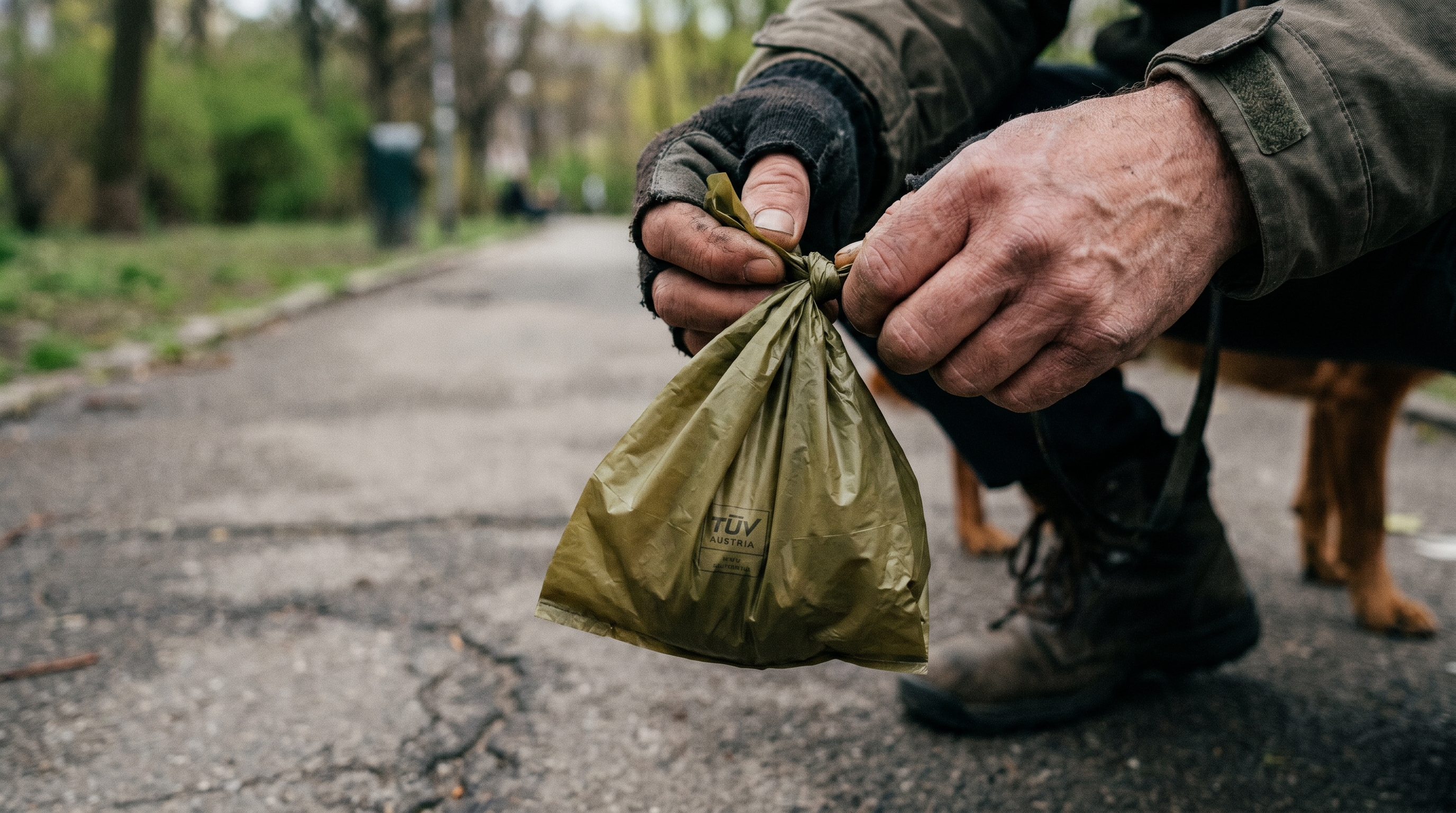
Dog owner picking up after their dog on a suburban sidewalk at dawn with a green poop bag roll

A compostable pet waste bag is one that an independent lab has tested and shown to break down under set composting conditions. A "biodegradable" bag has passed no such test. The catch for dog owners is that the mark only counts if the bag, and the poop inside it, end up in a compost system built for pet waste. For most people that means a dedicated pet-waste composter in their own yard, or it means nothing at all.

"Biodegradable" vs. "compostable": one is a word, one is a test

"Biodegradable" has no legal definition for plastic products in the US. No test is required to print it on a bag. Many bags sold as biodegradable are ordinary polyethylene with an additive that makes the film fall apart faster. They do not turn into soil. They turn into microplastics. The EU restricted this kind of additive plastic (sold as "oxo-degradable") in single-use products in 2019. That is why we do not use the word for our bags.

"Compostable" is different. It means the bag was tested against a written standard, by a lab that does not work for the brand, and passed. The standard sets the conditions (temperature, moisture, time), and the bag has to fall apart, be eaten by microbes, and leave compost that still grows plants. You either pass or you do not get the mark.

Words like "eco-friendly", "earth-friendly", and "green" sit in the first camp. Marketing. No test, no regulator, nothing you can check. For a longer walk through the three words, read Dog poop bags: degradable, biodegradable, or compostable?.

What a certification mark tells you, and what it does not
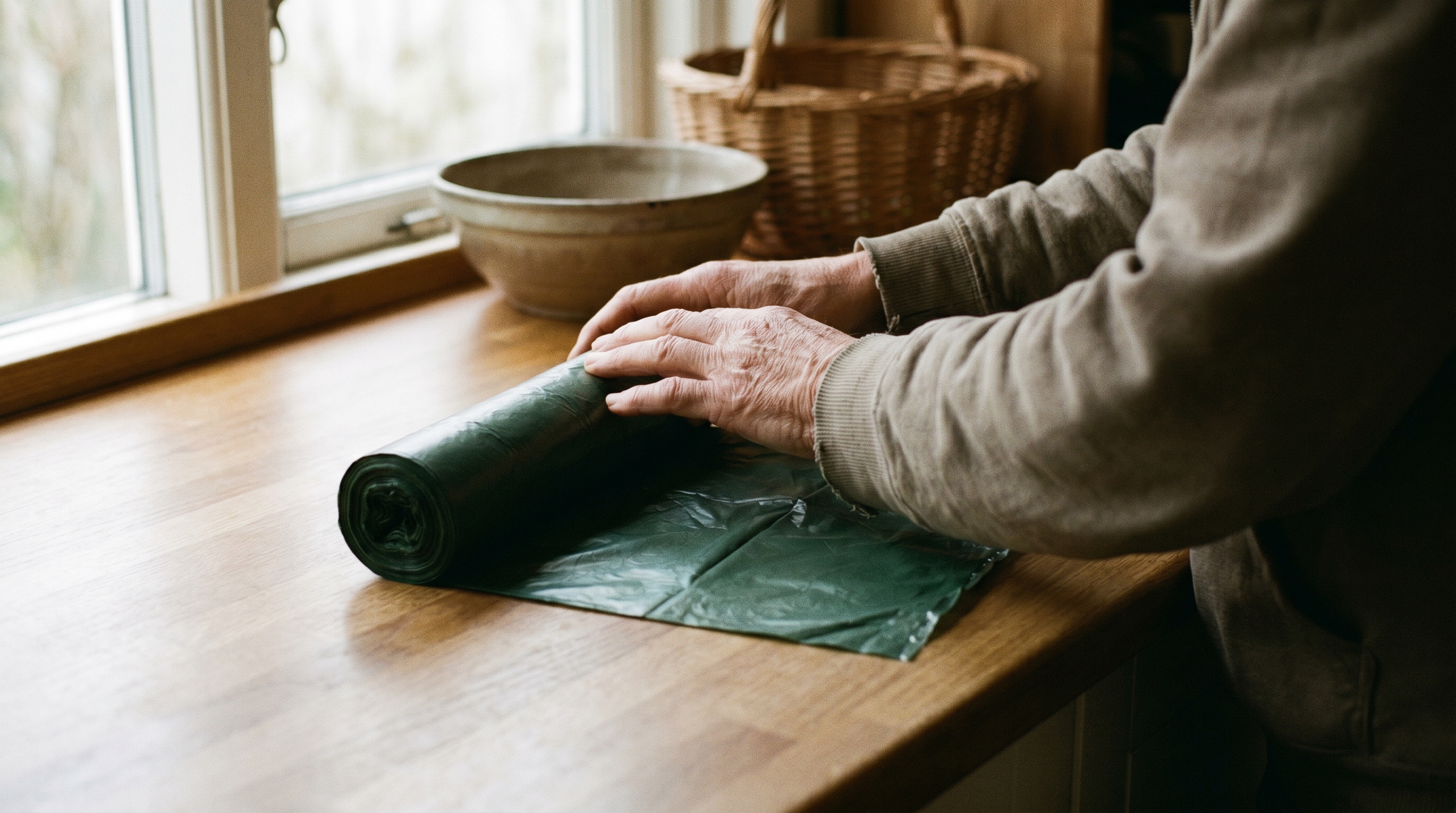
Person's hands reading the label on a green roll of pet waste bags on a kitchen counter
The certifier's name and a certificate number are the only two things worth looking for on the roll.

A real certification mark tells you three things.

  1. This exact product, at this exact thickness, was tested. The bag as sold, ink and all.
  2. An independent body ran the test and put its name on it. The main names are TÜV Austria (OK compost marks), BPI in the US, and DIN CERTCO in Germany.
  3. There is a certificate number you can look up on the certifier's public list.

A certification mark does not tell you what happens to the bag in a trash can. It does not tell you that your city accepts it. And it says nothing about whether the dog poop inside is safe to compost. Those questions matter more than the mark.

There are also two kinds of compostable mark. Industrial marks (tested to standards such as ASTM D6400 in the US and EN 13432 in Europe) cover a hot, managed facility. Home marks cover a backyard pile at ordinary outdoor temperatures. A bag with only an industrial mark may never break down in a backyard composter. If you home compost, the home mark is the one that counts. TÜV Austria OK compost HOME is the common one, and we explain the certifier and the test in What are TÜV Austria compostable bags?.

Where the bag ends up decides everything

Three places a bagged dog poop can go. The certification only matters in one of them.

The trash

This is where most dog poop in the US goes, and it is a fine choice. Landfill is built to keep things sealed, dry, and starved of oxygen. Nothing meaningfully breaks down in there, compostable bag or not. So if the trash is your route, weigh the bag on the walk first: thick film, no leaks, easy to open with cold fingers.

The city green bin

Most municipal and commercial composting programs in the US do not accept pet waste. The reason is pathogens, not the bag. So an "industrially compostable" bag is not a real disposal route for dog poop, whoever makes it. Unless your program says in writing that it takes pet waste, keep dog poop out of the green bin.

A dedicated pet-waste composter
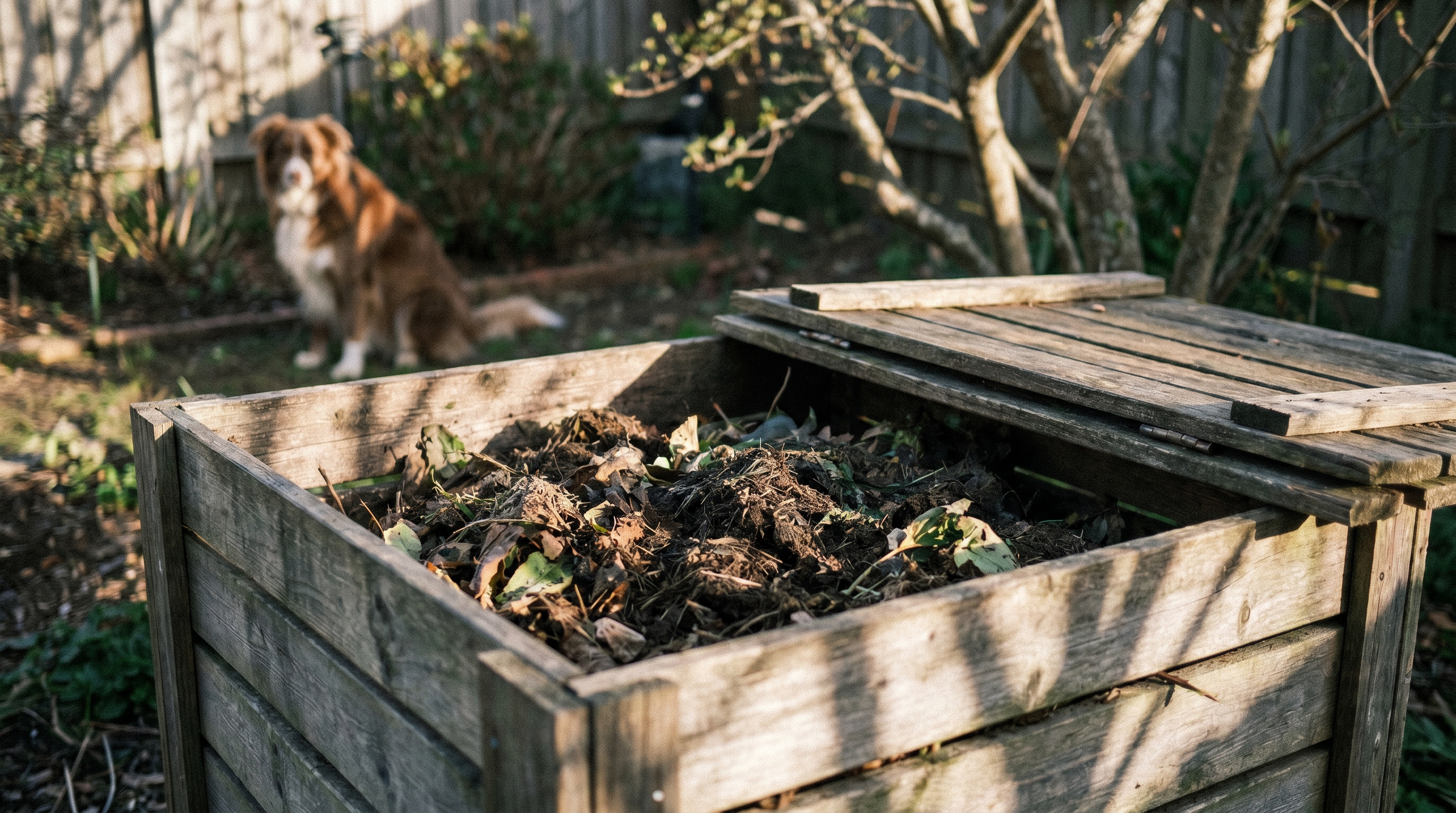
Open wooden backyard compost bin with dark finished compost and a dog in the blurred garden behind
Dog poop gets its own composter. It never goes in the bin you use for the vegetable garden.

This is the only place a home-compostable mark does anything. And it has rules:

  • Keep it separate from your garden compost. Dog poop can carry E. coli, roundworm, and Giardia, and a cool backyard pile does not get hot enough to kill them.
  • Use the finished compost on non-food plants only. Ornamentals, hedges, the lawn. Never on anything you eat.
  • Pick a system built for the job: an in-ground digester (the Doggie Dooley type), a dedicated bin kept away from food compost, or a bin plus an enzyme or bacteria additive that speeds things up.

The step-by-step, including what to do in winter, is in Compost dog poop: the only guide you will use.

Why the material matters

The material is what gets certified. A standard does not test a promise on a package. It tests the physical film, at the thickness it is sold in, with the ink printed on it. Ordinary plastic with an additive cannot pass, however it is labeled, because the microbes in compost do not eat it.

Thickness is part of the same story. A thinner film is easier to certify and cheaper to make. It is also the bag that rips on a Great Dane walk. Look for a bag that is thick enough to trust and certified at that thickness.

What about cat litter and small pets?

This page is about dog poop. Used cat litter has a shorter answer: it goes in the trash. None of the certification talk above changes that. Pick a litter bag for size, strength, and handles, and tie it tight. For rabbits, guinea pigs, and hamsters, a standard dog poop bag is the right size for cage cleanup.

Common questions

Are compostable poop bags strong enough for big dogs?

The good ones are. Strength comes from film thickness, not from the certification. Our bags are extra thick, and a Judge.me reviewer with a Great Dane described them as "thick enough to not tear." If a bag feels thin on the roll, it will feel thin on the walk.

Can I put a compostable poop bag in my regular garden compost?

No. Not because of the bag, because of the poop. Dog waste carries parasites and bacteria that survive cool composting, and you do not want them near your tomatoes. A dedicated pet-waste composter is the only home option, and the finished compost stays on non-food plants.

Can I put dog poop in the city green bin if the bag is certified?

Almost always no. Most US municipal composting programs reject pet waste outright. Check your program's rules in writing before you assume. The bag does not change the answer.

Would you like to leave a comment?

Please note, comments need to be approved before they are published.

WHY PEOPLE LOVE IT

Natural cat wipes: a vet-reviewed guide to lick-safe ingredients and plant fibers (2026)

Natural cat wipes: a vet-reviewed guide to lick-safe ingredients and plant fibers (2026)

Natural cat wipes are only as safe as what your cat licks off. A vet-reviewed guide to lick-safe ingredients, plant...

Cat Wipes: When to Use Them, What's Safe, and How to Avoid the Bath War

Cat Wipes: When to Use Them, What's Safe, and How to Avoid the Bath War

Cat wipes are pre-moistened cloths for spot-cleaning a cat's coat, paws, and facial folds without water. Learn when to use...

Tabby cat beside a litter box in a tiled bathroom

Cat litter bags vs tray liners: which do you need?

Litter bags are for the daily scoop. Tray liners are for the full box change. Here is how to tell...

Best dog wipes for paws: what actually works after a muddy walk (2026 guide)

Best dog wipes for paws: what actually works after a muddy walk (2026 guide)

The best dog wipes for paws use absorbent VEOCEL™ Lyocell fibers and a fragrance-free, lick-safe formula. Here's what separates a...

No More Dirty Paws: From Sticks to Wipes

No More Dirty Paws: From Sticks to Wipes

Dogs and sticks? A timeless romance. But at GIVE A SH!T®, we think the stick love story deserves a clean...

The Growing Movement Towards Cruelty-Free Pet Care
  • #pet care

The Growing Movement Towards Cruelty-Free Pet Care

Choosing cruelty-free pet care isn't just about pampering your furry friends. It's about standing up for animals, choosing safer, gentler...

Pareto Principle in Pet Care: Smart Budgeting for Your Furry Friends
  • #dog owner
  • #dogs

Pareto Principle in Pet Care: Smart Budgeting for Your Furry Friends

Feeling like pet expenses are piling up? With the 80/20 rule, you can focus on essentials, cut out the extras,...

Why Your Pet’s Skin Deserves Better: The Impact of Cheap Pet Products
  • #dog health
  • #wipes

Why Your Pet’s Skin Deserves Better: The Impact of Cheap Pet Products

Cheap pet products may seem like a bargain, but they often contain harsh ingredients that can harm your pet's skin...

My Dog Won't Eat: Addressing Your Dog's Appetite Issues

"My Dog Won't Eat": Addressing Your Dog's Appetite Issues

Is your dog refusing to eat? Discover the common causes and practical solutions to help your furry friend regain their...

Dog Friendly Plants: Creating a Safe Haven for Your Pets
  • #dog health
  • #tips for dogs owners

Dog Friendly Plants: Creating a Safe Haven for Your Pets

Discover beautiful, dog-friendly plants that will brighten your home without posing a risk to your pets. Learn how to create...

The Dangers of Artificial Fragrances in Pet Products
  • #bath
  • #bathe a puppy

The Dangers of Artificial Fragrances in Pet Products

Many pet products contain artificial fragrances that can harm your pet’s health. Learn about the dangers of synthetic scents, how...

Air Dried Dog Food: The Ultimate Guide to a Healthy and Nutritious Diet
  • #dog food
  • #dog recipes

Air Dried Dog Food: The Ultimate Guide to a Healthy and Nutritious Diet

We constantly seek the best nutrition for our furry friends. One option that has gained popularity in recent years is...

Kennel Cough: What Every Dog Owner Needs to Know
  • #dog health

Kennel Cough: What Every Dog Owner Needs to Know

Discover everything you need to know about kennel cough, from symptoms to treatment and prevention. Keep your furry friend healthy...

Spooktacular Pet Costumes: Halloween Fun for Cats and Dogs
  • #cat fashion
  • #cat owner

Spooktacular Pet Costumes: Halloween Fun for Cats and Dogs

Celebrate Halloween with your furry friends! From adorable cat costumes to spooky dog accessories, discover how to make your pets...

Black Cat and Halloween: Busting Myths and Protecting Our Feline Friends
  • #cat owner
  • #cat tips

Black Cat and Halloween: Busting Myths & Protecting Our Feline Friends

Black cats and Halloween have a long, misunderstood history. In this post, we debunk myths, raise awareness about their safety...

Harmful Chemicals in Pet Shampoos: What You Need to Know
  • #bath
  • #dog bath

Harmful Chemicals in Pet Shampoos: What You Need to Know

Discover the hidden dangers in many pet shampoos that could be compromising your pet’s health. Learn about common harmful chemicals,...

Understanding Rabies Disease: A Vital Guide for Pet Owners and Animal Lovers
  • #dog health

Understanding Rabies Disease: A Vital Guide for Pet Owners and Animal Lovers

Rabies is a deadly viral infection that affects both animals and humans, with fatal consequences if not treated promptly. Learn...

Fall Safety Tips for Dog and Cat Owners
  • #cat owner
  • #cat tips

9 Fall Safety Tips for Dog and Cat Owners

As the vibrant colors of fall emerge, ensure your pets stay safe with these essential tips. From managing colder temperatures...

Keeping Your Dog’s Dry Food Fresh and Safe
  • #dog food
  • #food

Keeping Your Dog’s Dry Food Fresh and Safe

Keep your dog's dry food fresh and nutritious with these essential storage tips. Learn how to properly store, identify spoilage,...

What Plants Are Toxic to Dogs?
  • #dog health
  • #tips for dogs owners

What Plants Are Toxic to Dogs?

Protect your furry friend from hidden dangers! Discover common household and garden plants that are toxic to dogs, and learn...

Family Run Start-Up

Earth friendly

Recycled Materials

Cruelty Free Peta Certified